Your cart is currently empty!
Tag: wild flowers
-
Time To Sow!
Now that many weeks of cold stratification are done, its finally time to sow the wild flower seeds.
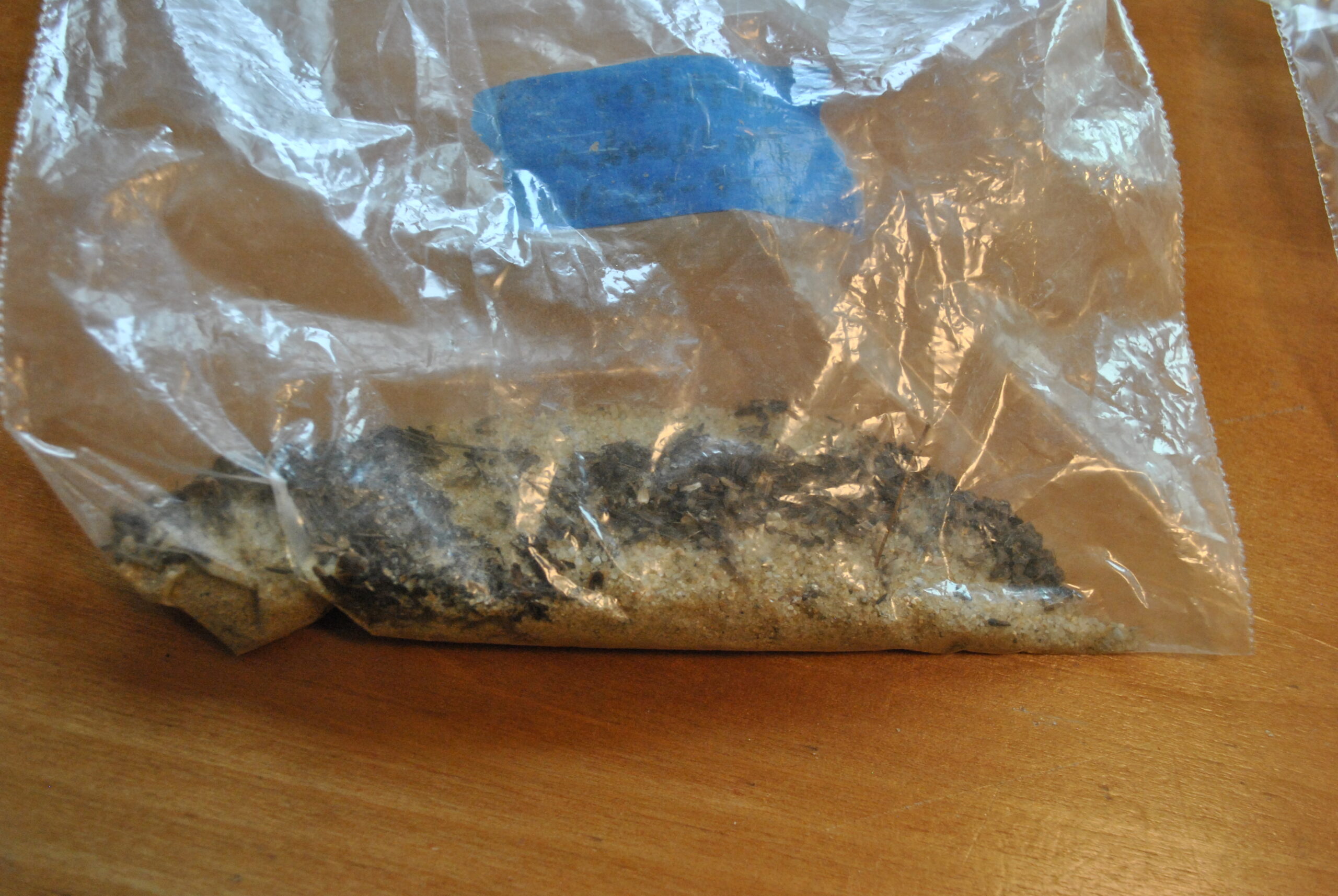
Sowing wild flower seeds is easy, many of them require light to germinate, so you simply have to spread them on top of the soil and wait. I cold stratify my seeds in slightly damp sand, so I simply spread the sand along with the seeds onto small seed starting cells. The sand keeps the minuscule seeds from moving around, and still allows light to filter to the seed.
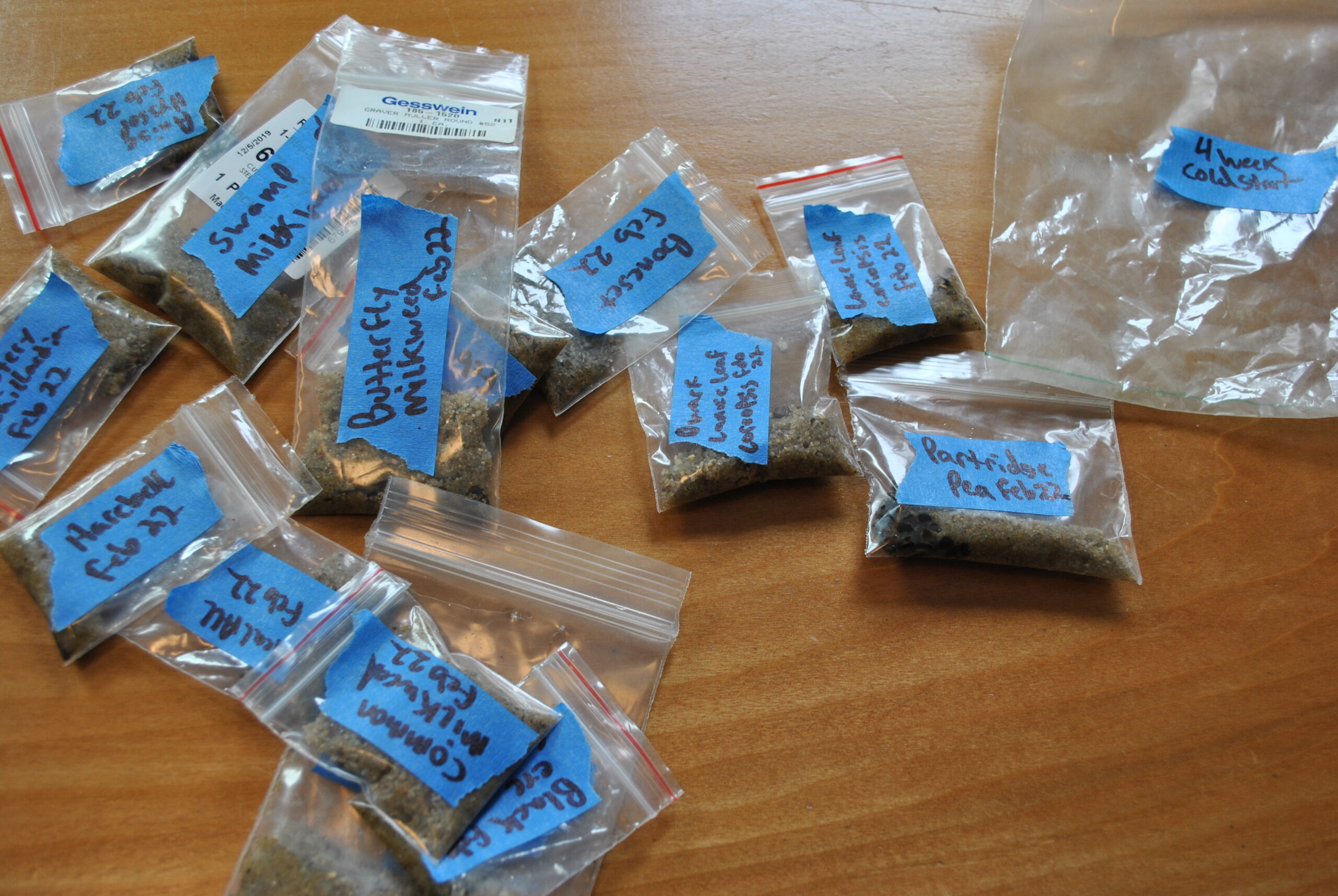
This year I am trying to do a much larger variety, and less of each plant.
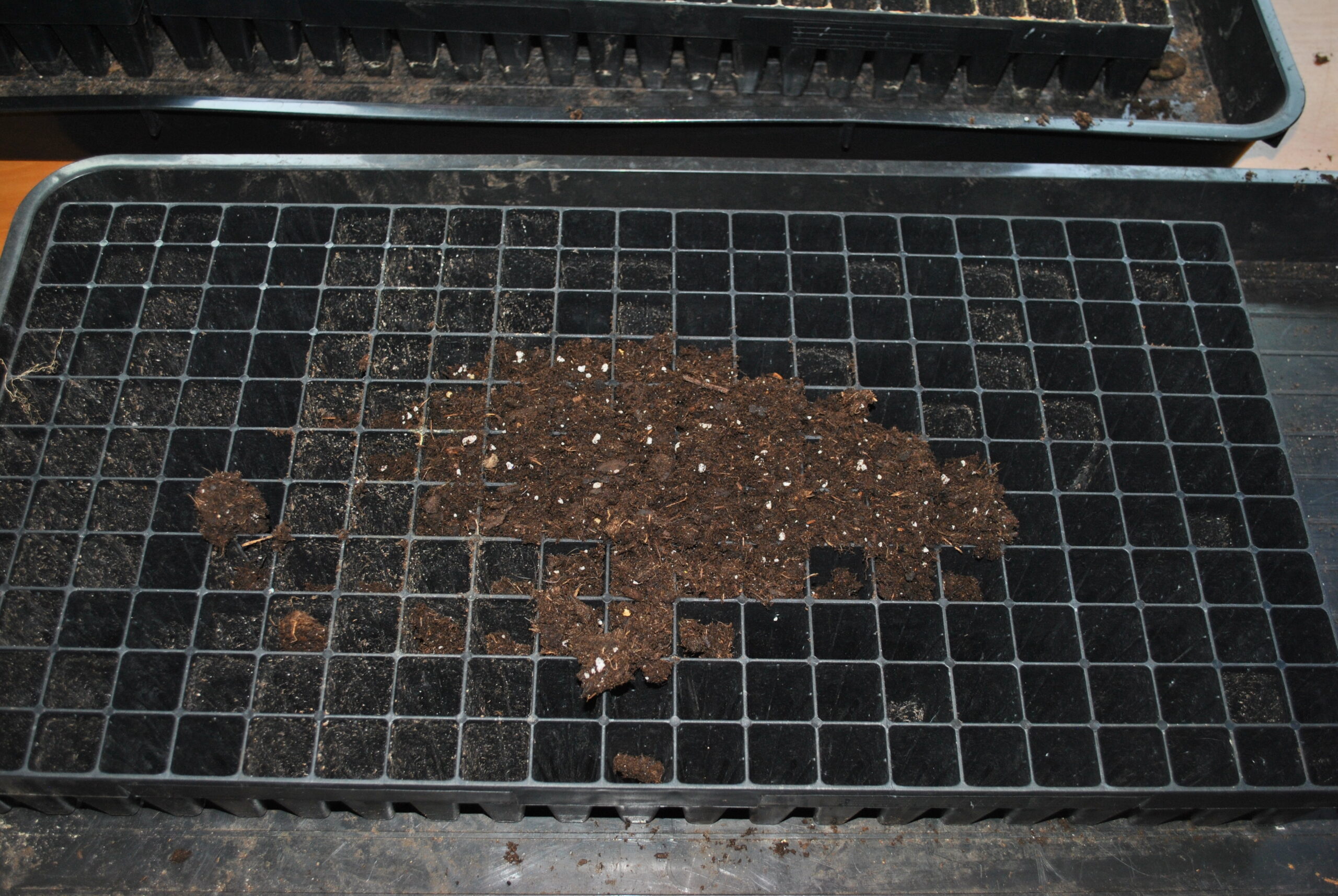
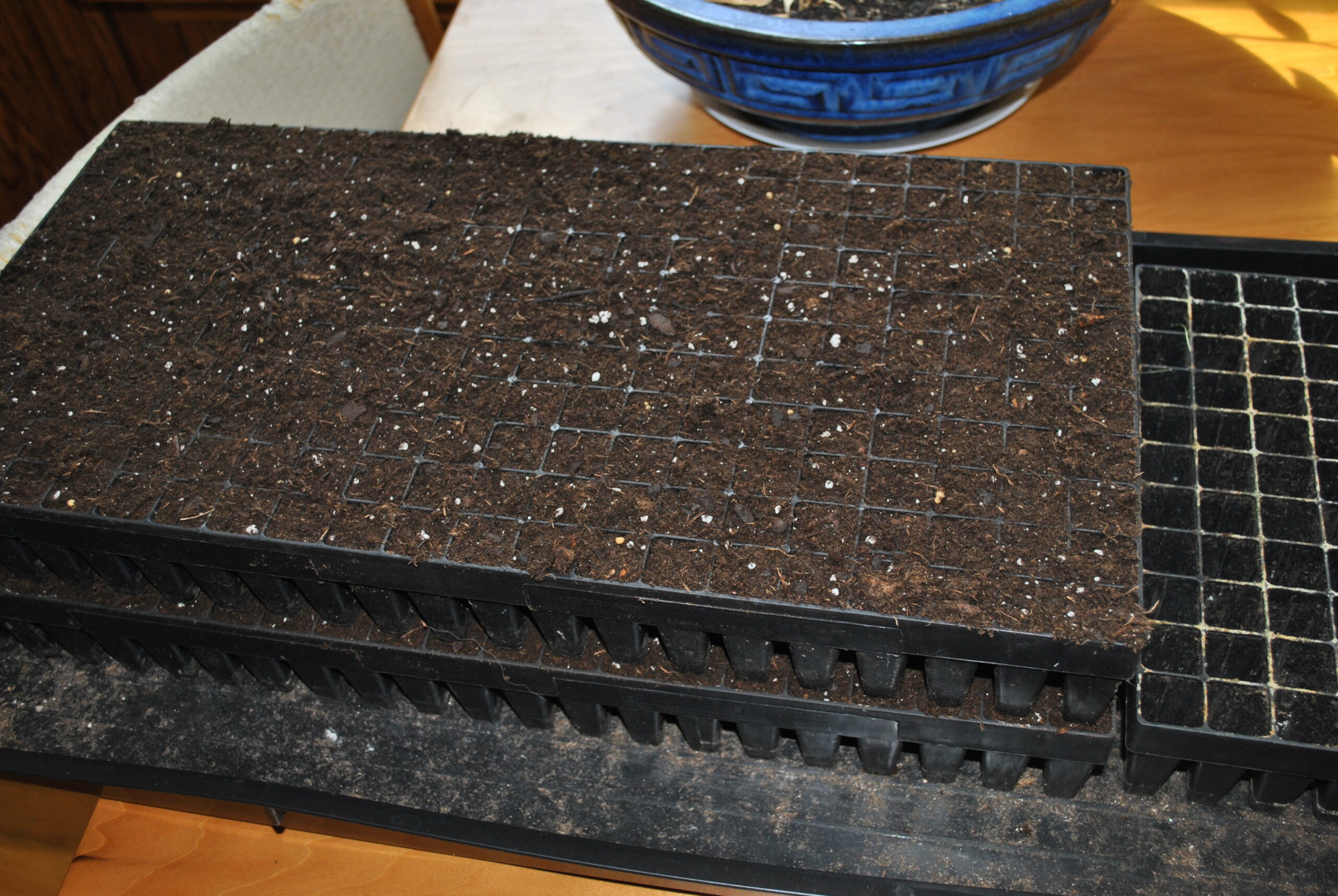
I use 11×21 cell seed starting trays, first I pack in a potting mix then push all the dirt down and put even more dirt in. I bottom water in trays so its important that ever cell is well filled with soil so that it will wick appropriately.
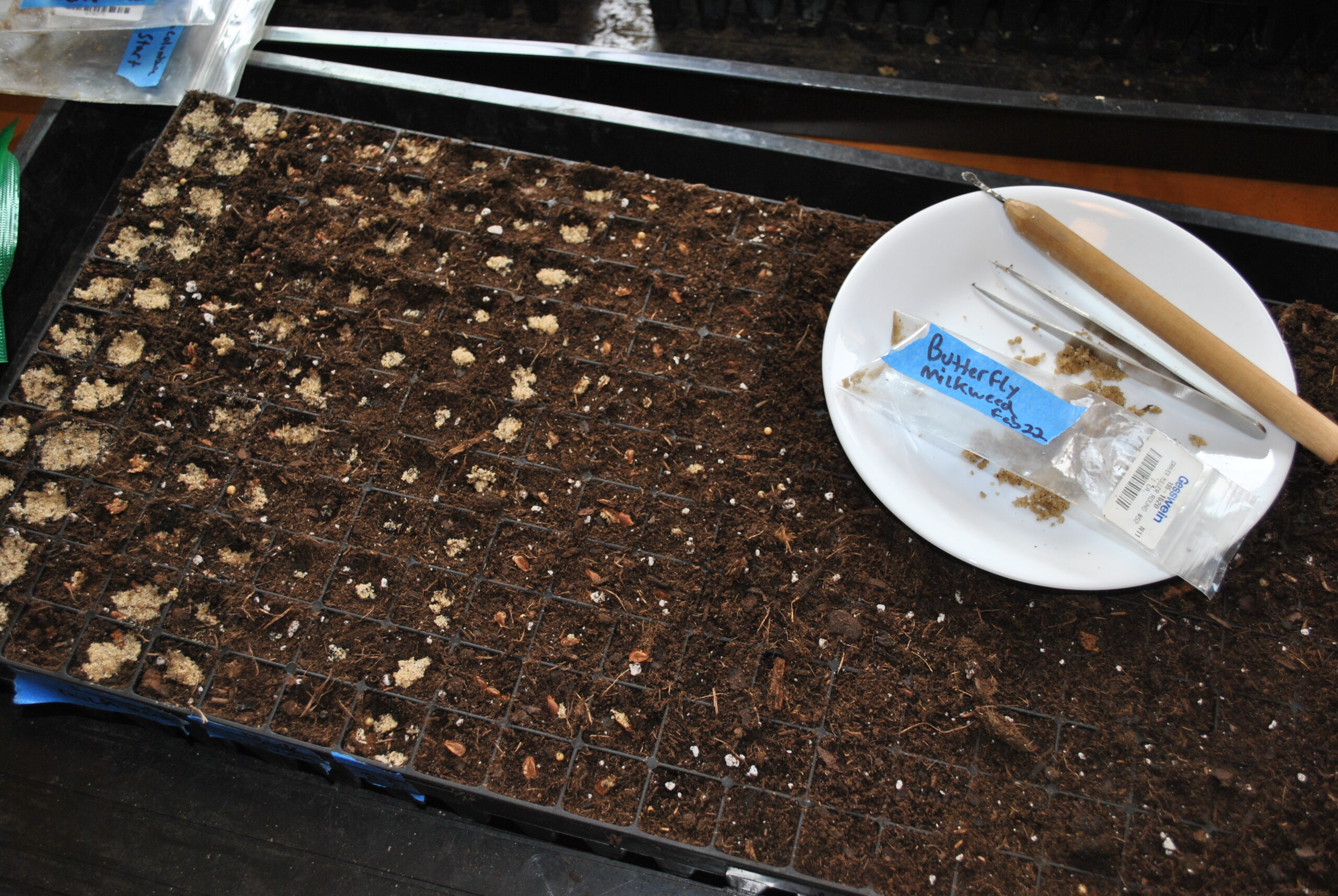
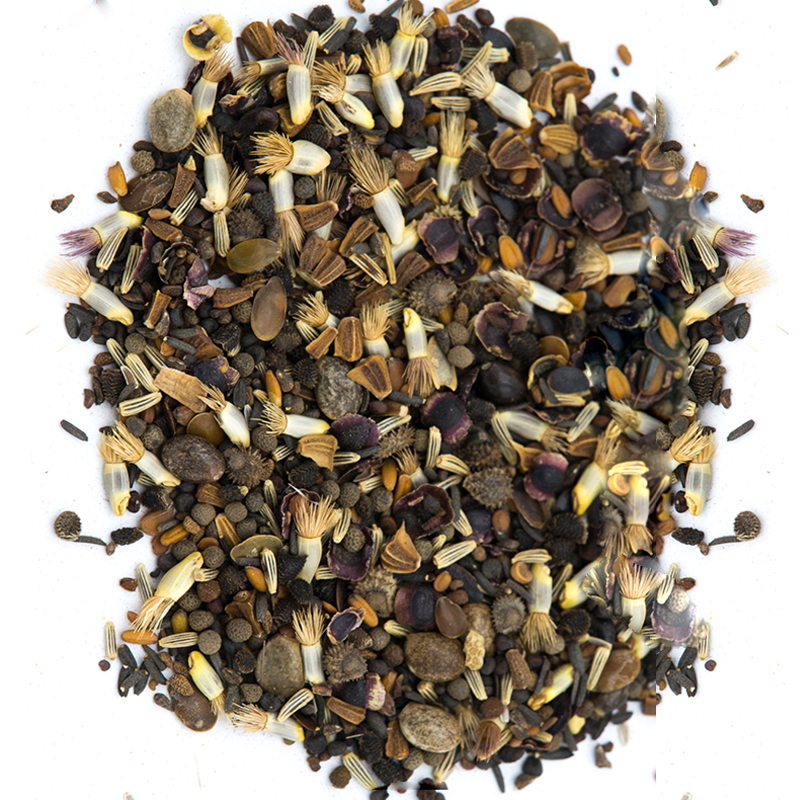
I have a series of tools that help me place one or a few seeds in each cell. This takes a long time, so I usually listen to music of a podcast while carefully placing seeds in each cell. In this picture I am doing milk weed which have comparatively huge seeds some are basically dust.
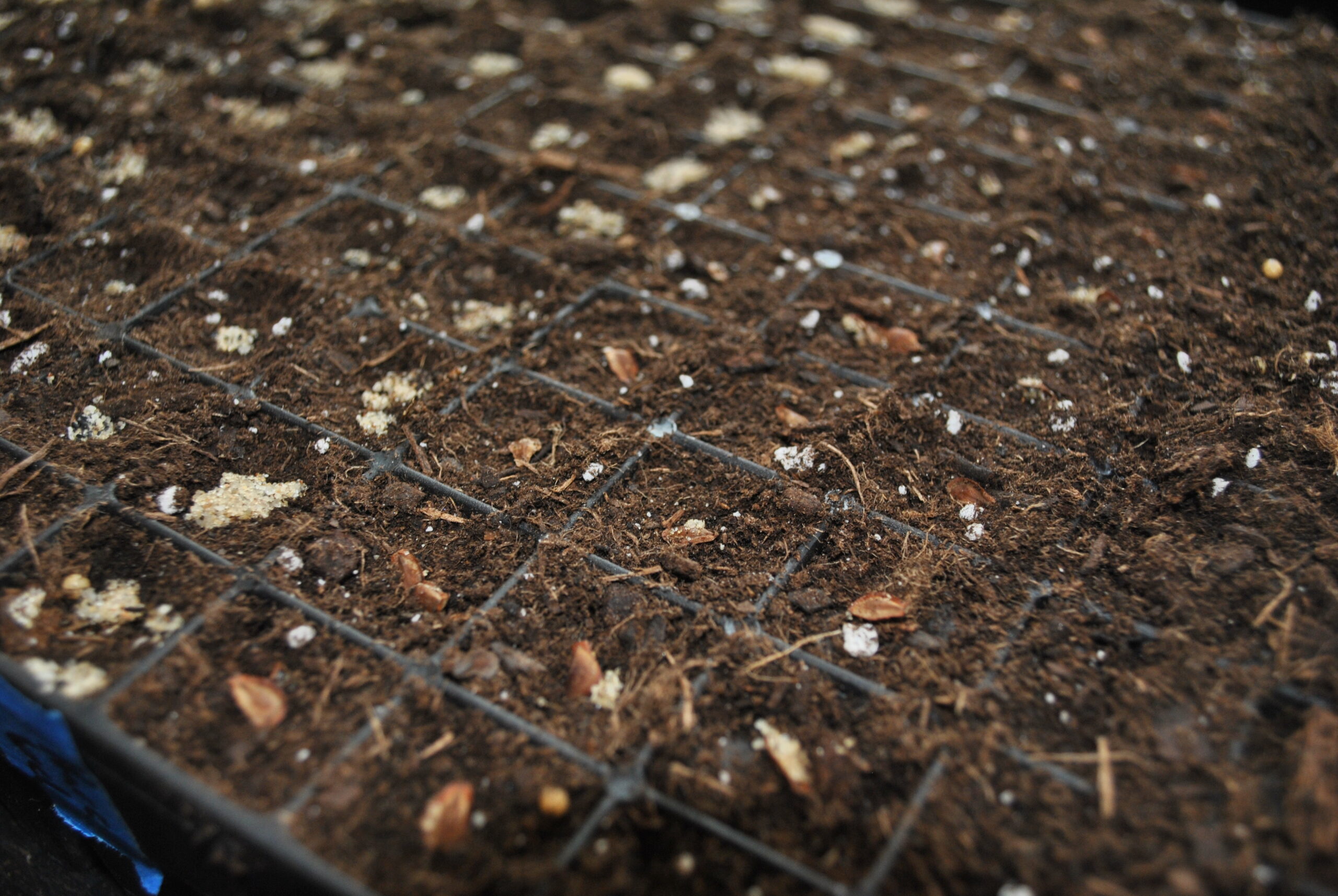
Most wild flower seeds just need to be placed on top of the soil. you can see the sand in some cells for the much smaller seeds.
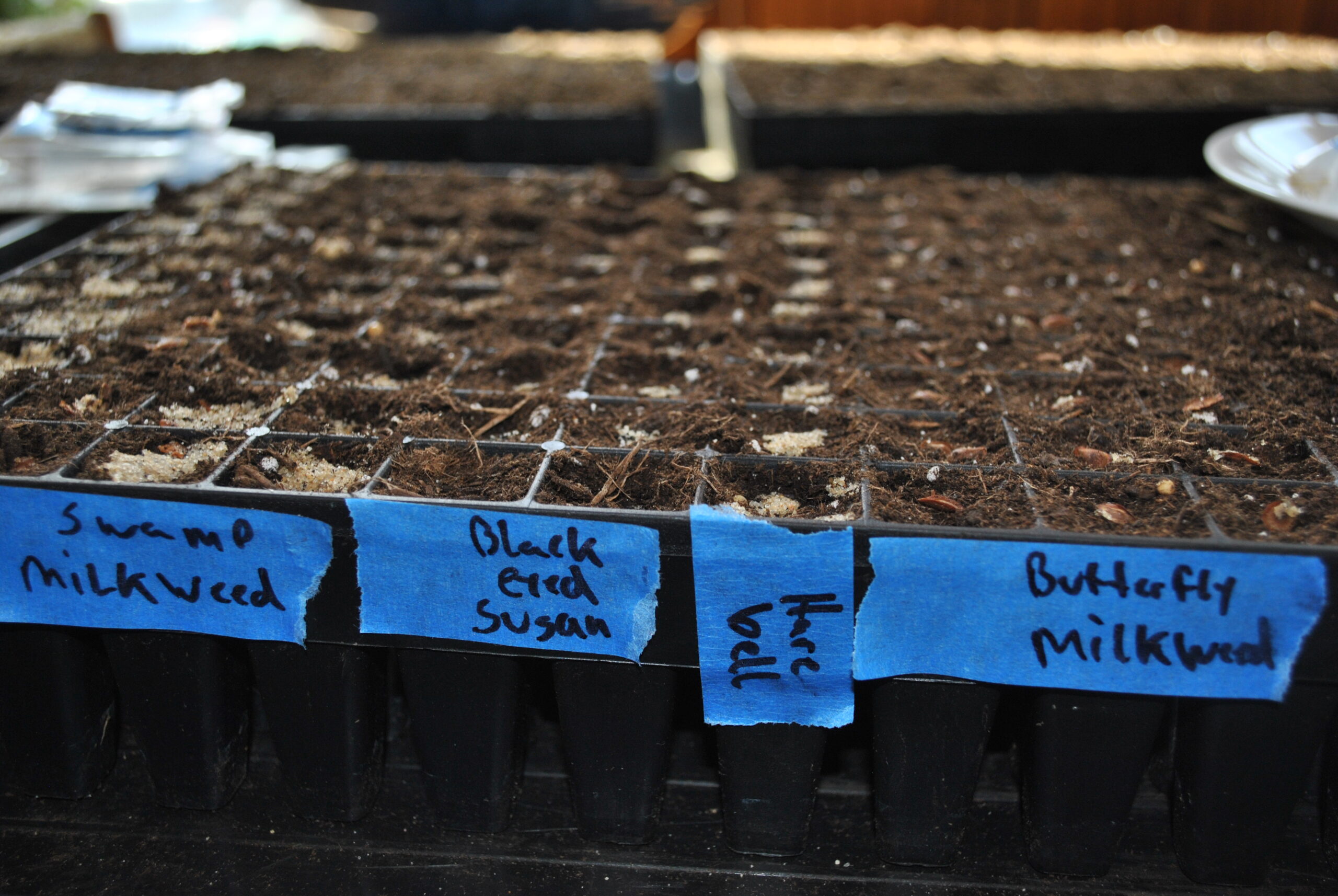
Labeling each row is vital because later they will have to be potted into larger containers and its vital to remember what is what, as they can all look very similar when seedlings.
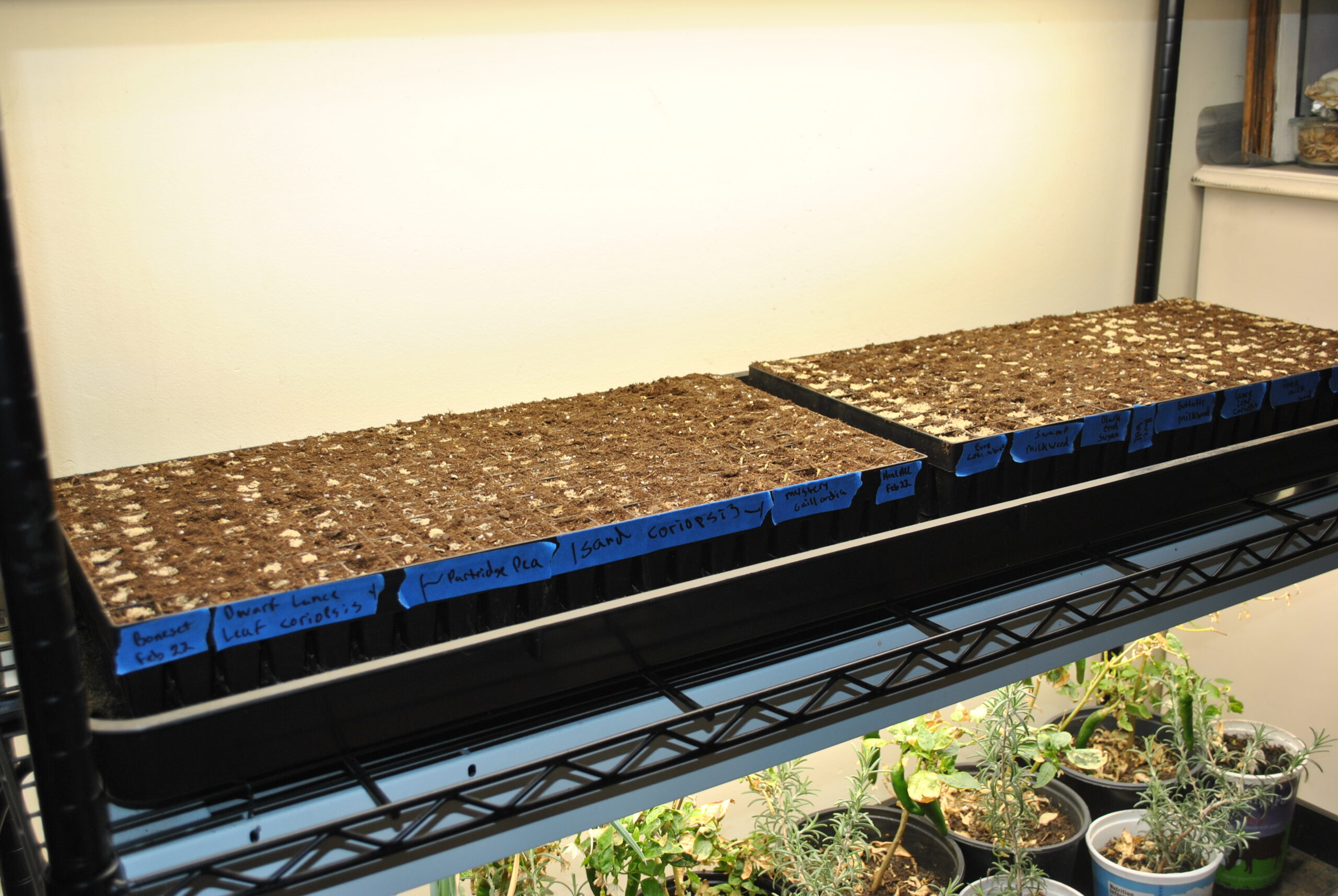
They are then placed into a home made “plant wall” in trays, so I can just pour water into the tray and it will wick up into the trays.
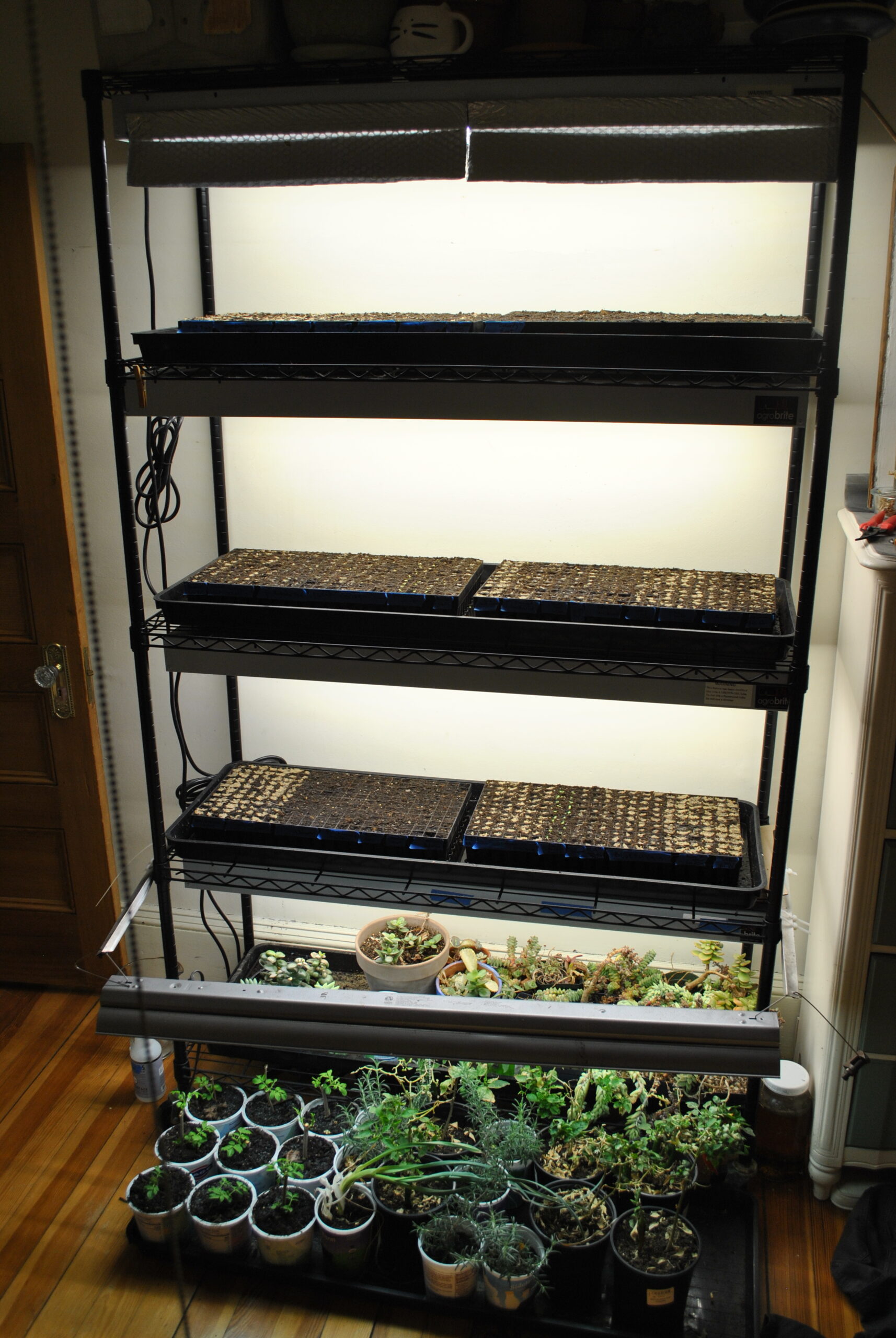
For this round of seed starting I ended up with 40 different kinds of flower, 6 trays at 231 seedlings per tray, roughly 1400 plants if all of them germinate. This will end up being the stock for the nursery this year combined with all the other plants that will get started outside in a few weeks.In just a few short weeks these plants will be ready to plant, you can purchase them by visiting the nursery.
-
Let The Cold Stratification Begin!
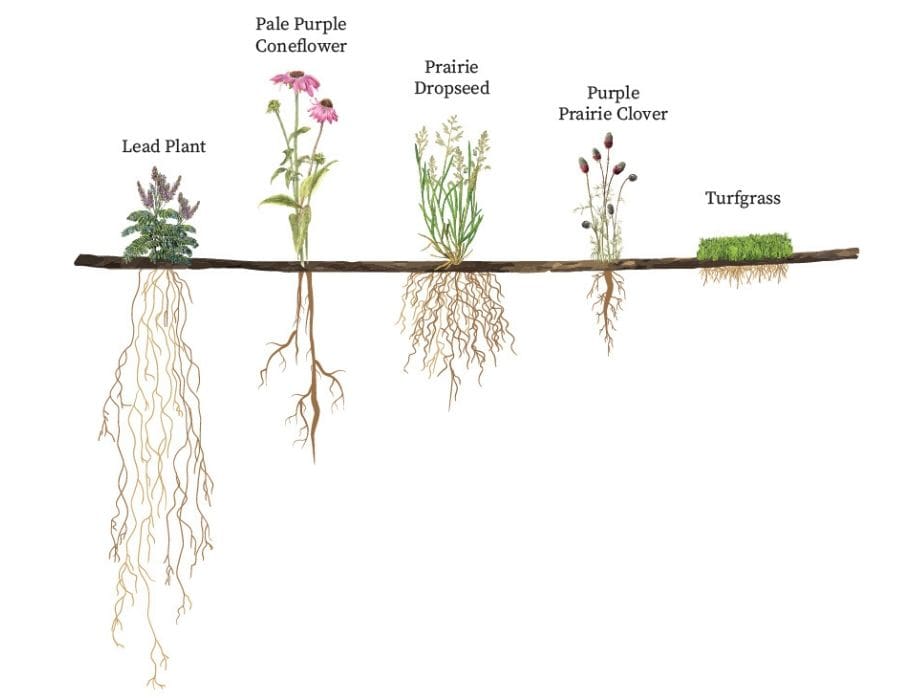
The lifecycle of native plants is pretty amazing. Most native wild flowers are Herbaceous Perennials, meaning they are non-woody plants that die back to the ground every winter and re-sprout every spring from deep roots. Incidentally this is one of the reasons why high grass prairie is one of the best ways to store carbon to fight global warming.
Wild flower seeds are also fascinating, most of them require what is called stratification, either warm or cold or both. To prevent the seeds from germinating too early and then being killed by a late frost the seeds have germination inhibitors in them that are slowly degraded by cold, or a combination of warm and cold. Most wild flower seeds require 4-8 weeks of being cold and damp before the seeds will germinate. In nature this would be accomplished by the seeds falling to the ground in fall, and just hanging out getting cold and snowed on all winter.
Some plants have taken this to extreme lengths, plants like Ramps require 18 months of stratification, 60 days of warm and damp followed by 90+ days of cold and damp stratification. Ramps don’t even go to seed until they are 7+ years old, and then their seeds can stay in the ground for over a year in order to get the required amount of warm and cold stratification.
So if you want to grow your own wild flowers, you will either need to spread the seeds upon the bare earth in fall and hope for the best, or you will have to stratify them yourself. Luckily almost all of us have the perfect cold damp environment in our homes, our refrigerator.

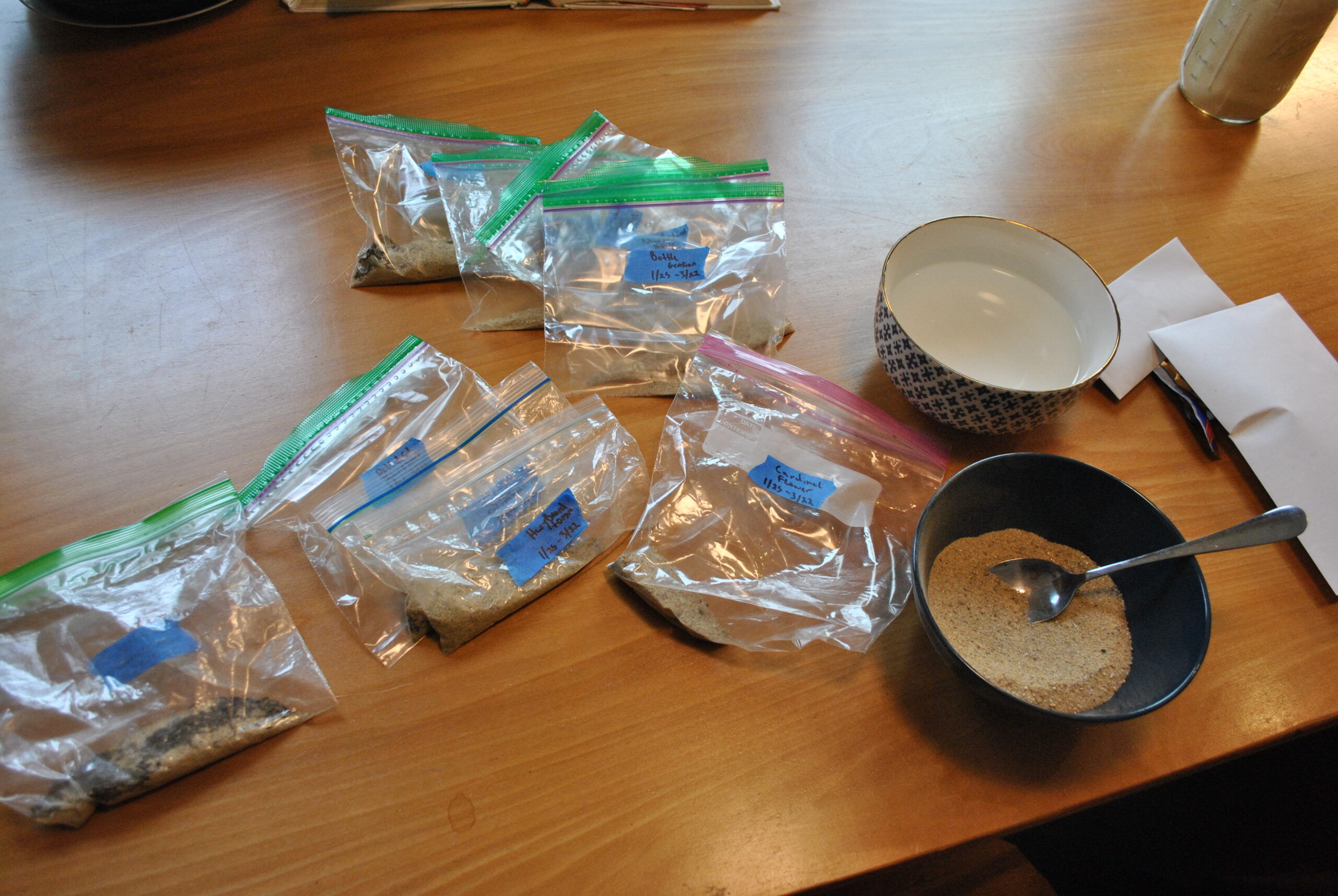
Every year around this time I start putting little baggies of damp sand and seeds into the back of my fridge in a march towards spring. First the 8 week seeds, then the 6 week, then 5 then 4…etc. Then sometime in march they all come out and get planted under some grow lights. In this way when spring rolls around I have hundreds of wild flower ready to go.
If you want to do this yourself here are some tips, use sand instead of soil as sand has less of a chance of growing mold. Use only enough water to gently dampen the sand, too much water will also cause mold. Be sure to label everything! The seeds are so tiny that you can barely see them let along remember which is which. When it comes time to plant just sprinkle the sand on top of the soil, most of these seeds do not want to be buried, and need light to germinate, the sand will allow the light to shine through it.Or if you don’t want to go through all that trouble you can make an appointment to visit Neighborhood Plants Nursery.